Why CALYXA® works scientifically
Every structural element of CALYXA® has a direct scientific basis. Nothing is decorative.
| Scientific Principle | Source | CALYXA® Solution |
|---|---|---|
| Root oxygen demand | NASA, UC Davis | 5 mm air gap + Air Flow Wings™ + 4 air inlets |
| Condensation cycle | NASA CELSS, ESA MELiSSA | 20 mm dome + condensation ridge + wing channels |
| Light exclusion | Cornell University, NASA | Blackout Zone™ + opaque sealed reservoir |
| Passive convection | NASA, greenhouse research | Lid geometry + Air Flow Wings™ |
| Oxygen roots (Kratky) | University of Hawai'i | Controlled water-level drop: Start → Max → Refill |
| Facet light diffusion | Light physics / optics | Light‑Reflective Lid™molded into lid surface |
| Capillary water movement | Plant physiology | Growing medium + Air pot geometry |
🌬️ 1. Root Zone Oxygenation — NASA & UC Davis
Why roots need a continuous oxygen supply
Plant roots consume oxygen in aerobic respiration, which provides the energy for nutrient uptake, cell division, root growth, and stress tolerance. When oxygen is insufficient, the root zone shifts into an anaerobic state → root rot develops, growth rate collapses, nutrient uptake weakens.
NASA and UC Davis have demonstrated that passive airflow is sufficient if the structure directs air to the root zone — and that an air gap above the water surface is essential in any passive system.
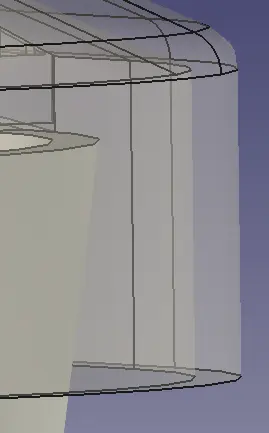
The 5 mm air gap — the structural gap between lid and container that continuously brings fresh air to the root zone. The 20 mm eave descends down the outside, creating light-tightness while keeping the gap open.
💧 2. Condensation Cycle — NASA & ESA
Closing the water loop — the same principle used in space
In closed growing systems (ISS, biospheres), plants produce large amounts of water vapor. Vapor condenses on cooler surfaces and the controlled return of condensate improves water efficiency dramatically. NASA CELSS and ESA MELiSSA research established the principles that CALYXA® applies at home scale.
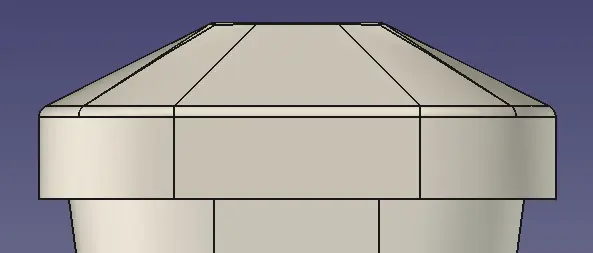
The 20 mm domed lid — the cooler surface where plant transpiration condenses and begins its return journey to the reservoir.
🪽 3. Air Flow Wings™ — Passive Convection
How passive ventilation actually works — three mechanisms
The Air Flow Wings™ are not decorative — they work through three distinct and simultaneous mechanisms.
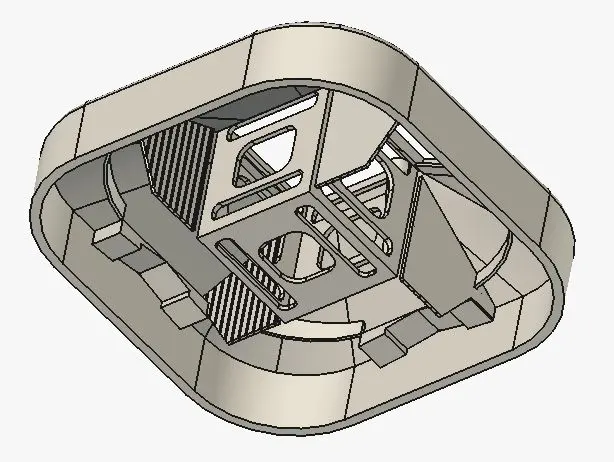
All four Air Flow Wings™ — directing incoming air toward the root zone, with condensation channels guiding water back to the reservoir. The Air pot is in the center; Pyramid Locking System™ contact points are visible around the perimeter.
Passive Convection
Air inside warms slightly → rises → the 5 mm gap acts as intake → wings direct the flow to the root zone. Small but continuous — exactly what roots need. Same principle as passive greenhouses and solar chimneys.
Condensation Return
Vertical grooves behind the wings catch condensation from the lid dome and guide it back down to the reservoir — a functional water recirculation system built into the same component as the airflow director.
Oxygen Root Zone
As the water level drops, the plant develops oxygen roots. The wings keep oxygen-rich air flowing to these roots, preventing the suffocation that can occur in a standard Kratky container without directed airflow.
🌑 4. Light Exclusion — Cornell University & NASA
Algae prevention is root zone protection
Cornell research demonstrates that light + water + nutrients = algae, and algae consume oxygen from the root zone. NASA root zone light exclusion studies confirm that complete light exclusion is critical in hydroponics — not optional.
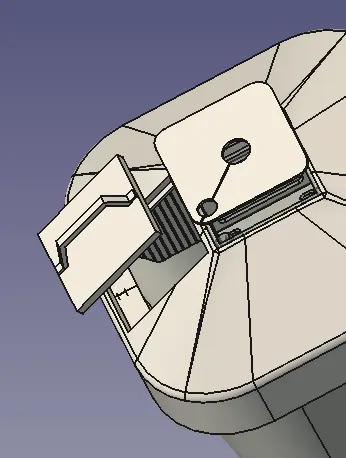
The Blackout Zone™ collar — the component that seals light from entering around the Air pot and inspection hatch
🌱 5. Oxygen Roots — University of Hawai'i (Kratky)
The plant's own breathing system
In the Kratky method, plants form two root types: water roots for nutrient uptake, and air roots for oxygen uptake. The water level must drop over time — too much water kills air roots. CALYXA® is designed around this principle.
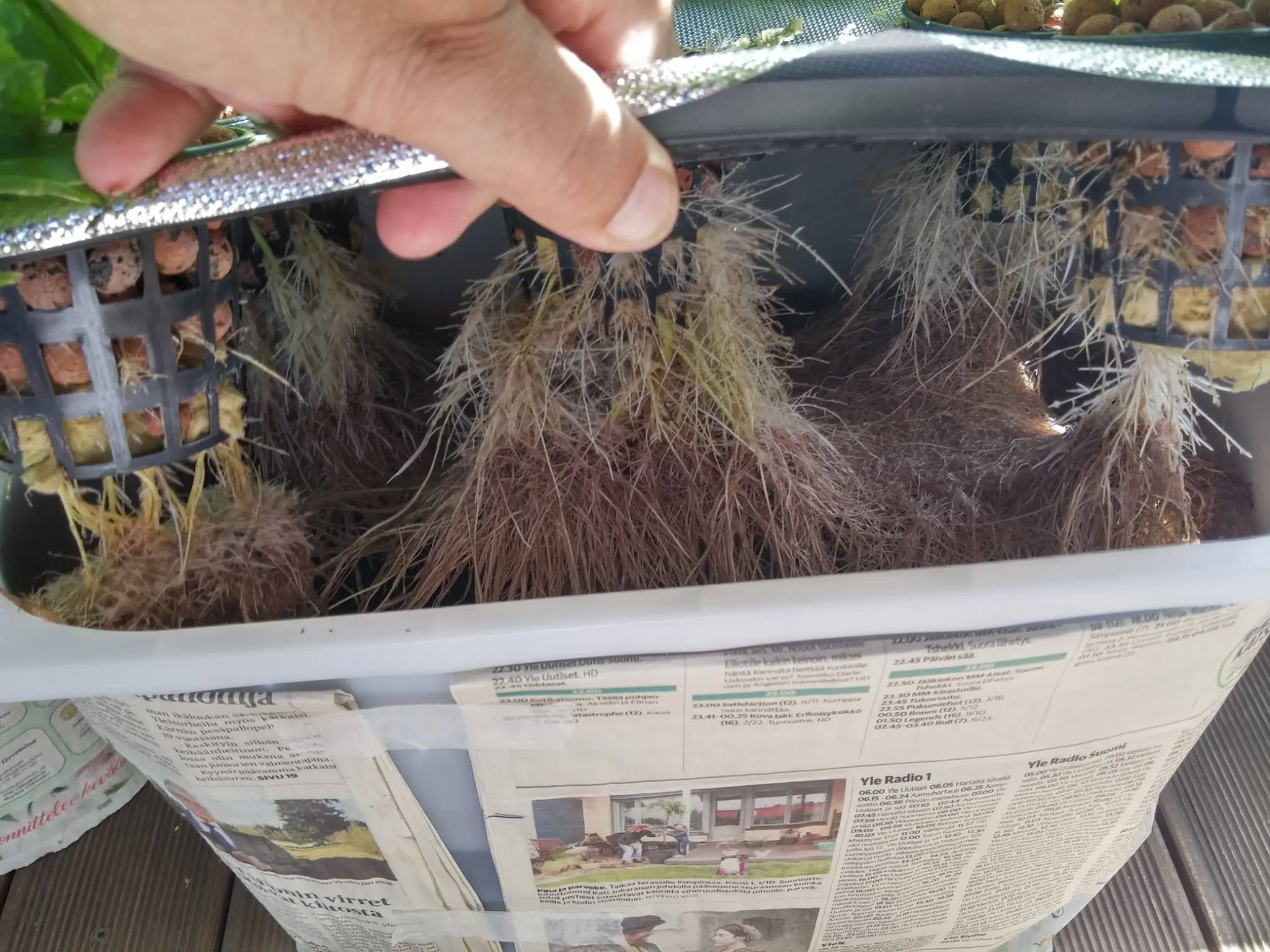
Oxygen root development in action — the dense root mass above the water line
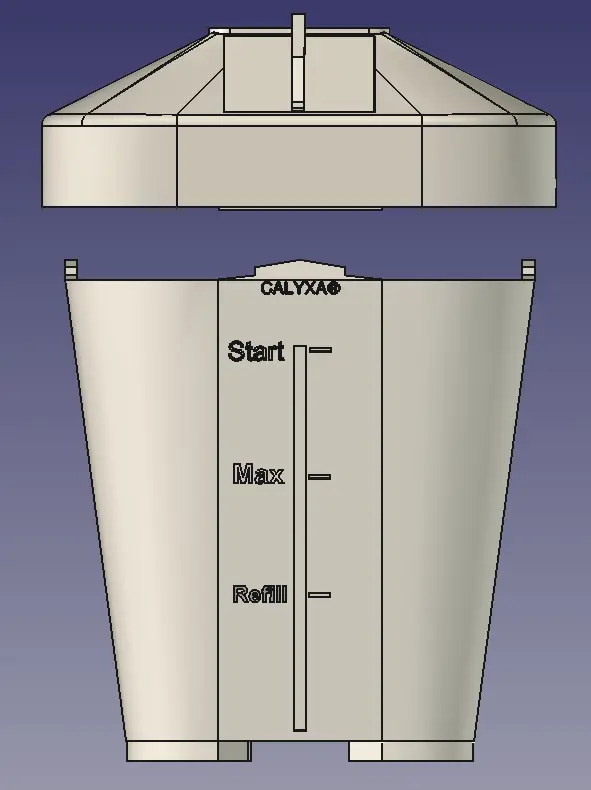
The CALYXA® geometry that makes controlled water-level drop possible
🌱 From Seed to Harvest
The complete growth lifecycle inside CALYXA®
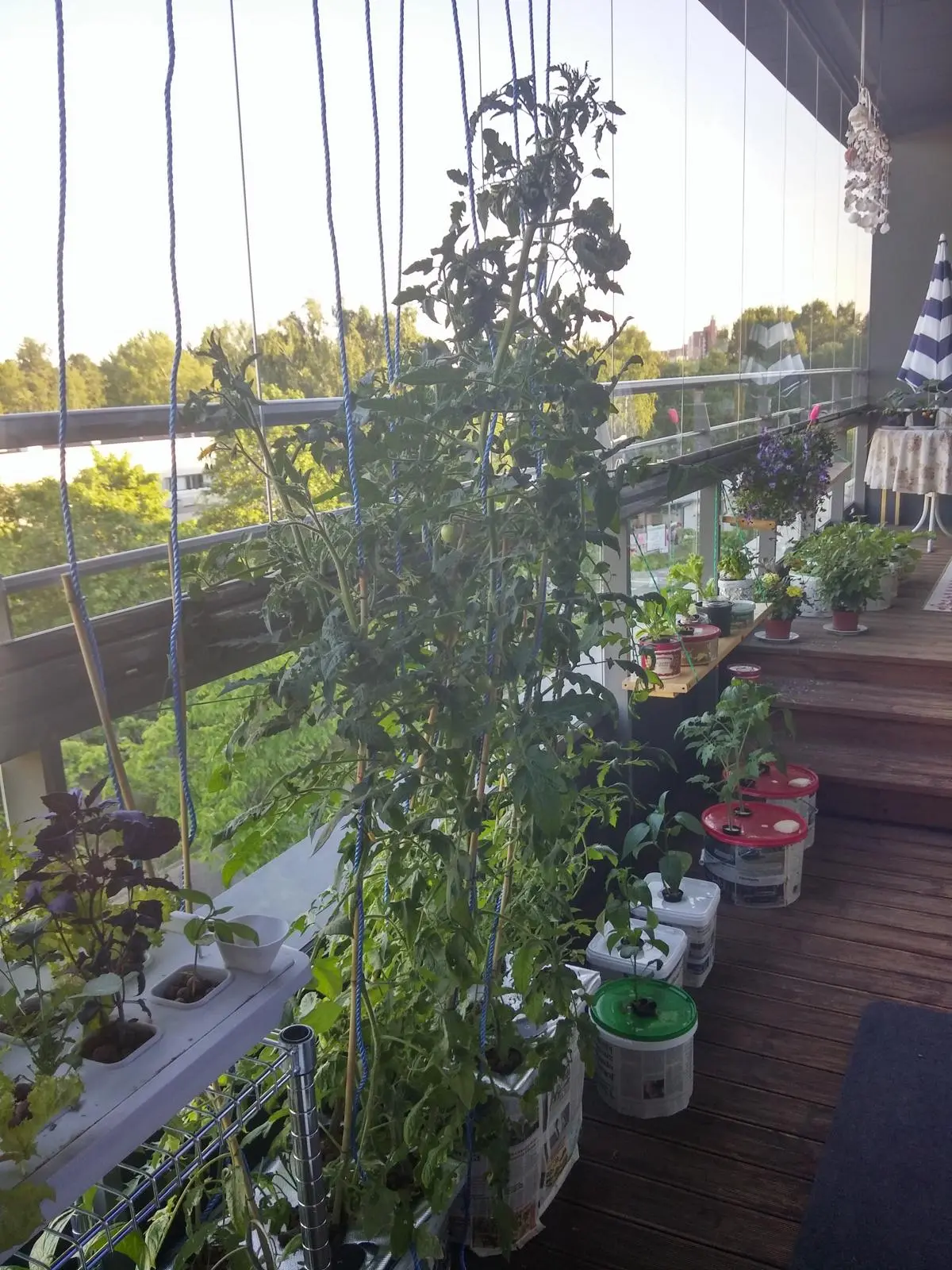
163 plants at different stages — all grown passively, all following the same lifecycle
👁️ Liquid Monitoring
Reading the liquid window — no sensors needed
The color of the liquid acts as a visual indicator of the plant's nutrient status and water consumption. Three elements to monitor: the liquid window (color and clarity), level markings (Start / Max / Refill), and the inspection hatch (root color and condition).
| Liquid color | Interpretation | Action |
|---|---|---|
| Clear, water-like | No nutrients, or nearly depleted. Typical during germination. | Add nutrient solution (1–2 ml/l) |
| Lightly tinted (yellowish/greenish) | Nutrients present; plant consuming steadily. | No action required |
| Evenly colored, translucent | Optimal nutrient balance. | No action required |
| Darkening (brownish/greenish) | Plant consuming more water than nutrients — concentration rising. | Add water only, up to MAX level |
| Clearing (nearly colorless) | Nutrients almost exhausted. | Add nutrients and water (1:10 ratio) |
🔬 Plant Physiology
How a plant drinks and absorbs nutrients in water
Water and nutrient uptake are based on two different mechanisms: transpiration-driven water movement and active ion transport in the roots.
- Water moves through the plant physically via transpiration — pulled upward from the roots by the cohesion–tension effect. A plant may consume 10–50× more water than nutrients.
- Nutrients move actively through ion pumps and carrier proteins — the plant chooses which ions it takes and how much. Transport requires energy (ATP) and a functioning root metabolism.
- The plant always consumes more water than nutrients → EC rises over time. In passive systems, this is normal and expected.
📚 Scientific References
Sources
Expert recognition
Dr. Bernard A. Kratky, the originator of the non‑circulating hydroponic method, reviewed the CALYXA® concept in 2026 and described some of its passive aeration and condensate‑return features as “in ways that I never could have imagined.”
His comment highlights that CALYXA® does not replace the Kratky method, but extends its core principles into a new, fully electricity‑free container architecture designed for modern homes, schools and research environments.